How This Number Was Built
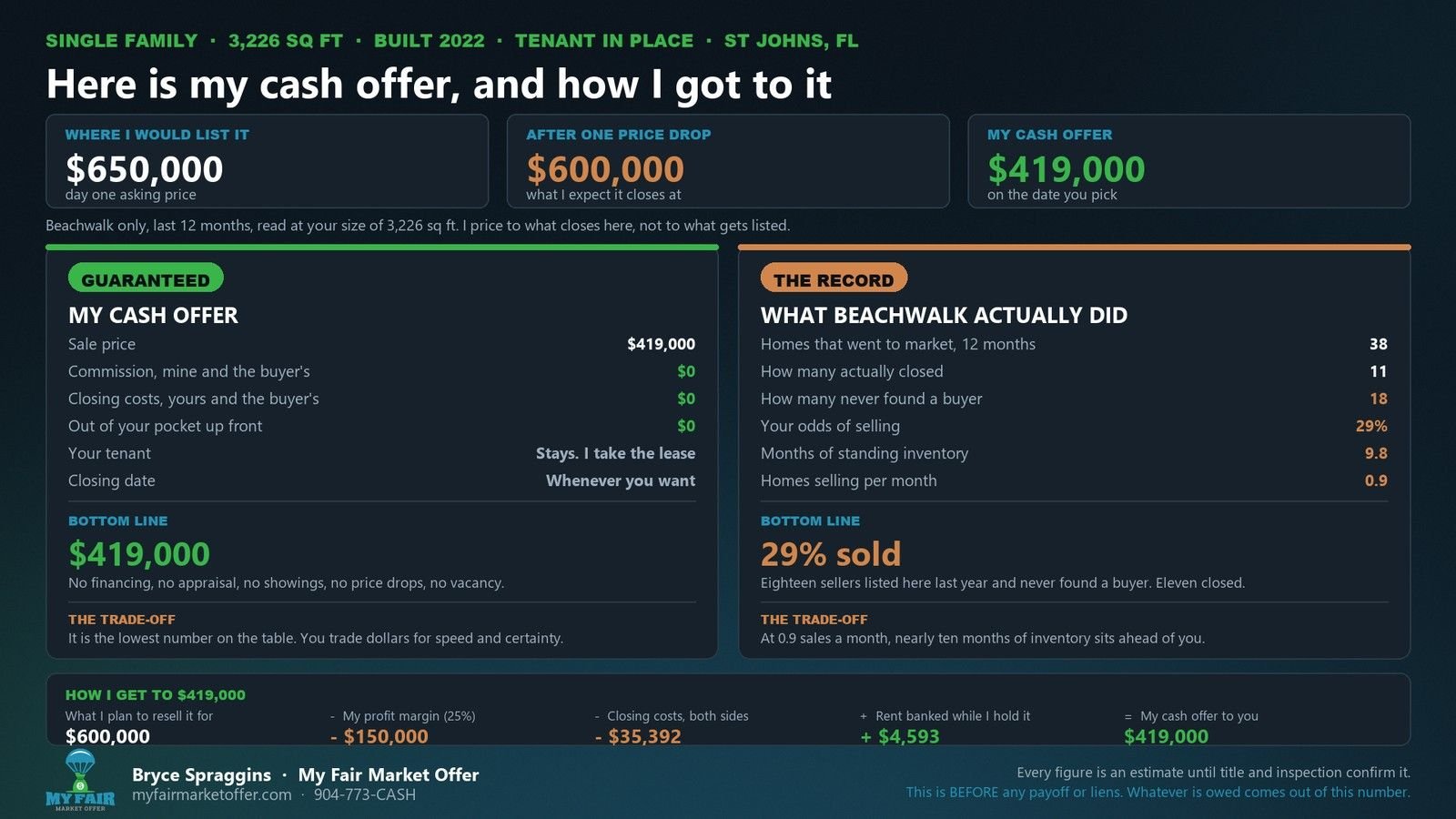
This is a 3,226 sq ft house built in 2022, in a resort-amenity community in northern St Johns County, with a tenant paying $5,000 a month on a lease that runs to next summer. The seller asked for a cash offer. She got one, plus three other ways to sell the same house, because the cash offer was not the best of them and the video says so out loud.
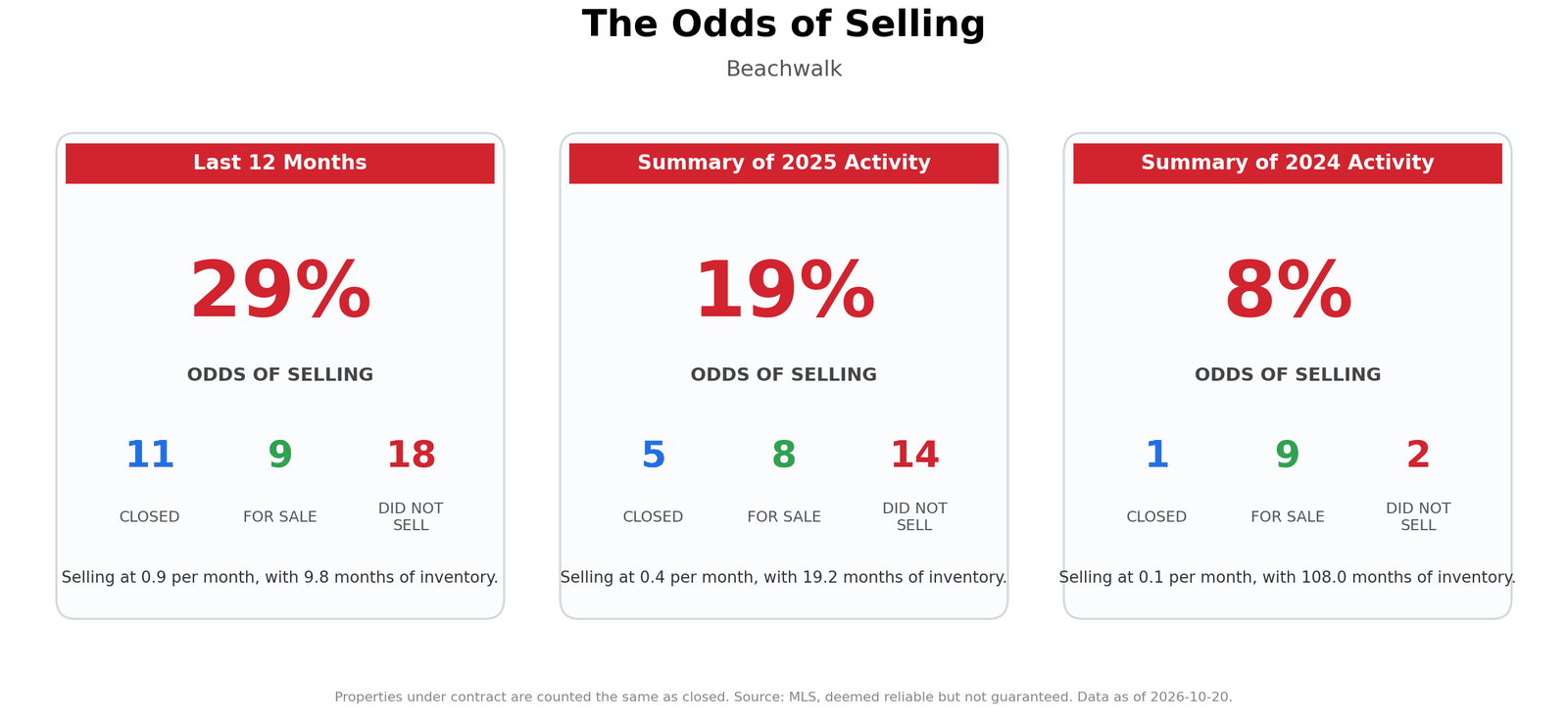
The market read came first, and it is ugly. The comp pull was deliberately hyperlocal — her neighborhood only, not a radius — and there was just enough sales data to read it. There are about nine months of inventory on the market. Six months is considered a balanced market, so nine is firmly a buyer’s market. Over the last twelve months 11 homes closed, 9 are still for sale, and 18 never found a buyer at all. That is a 29% chance of selling if you list.
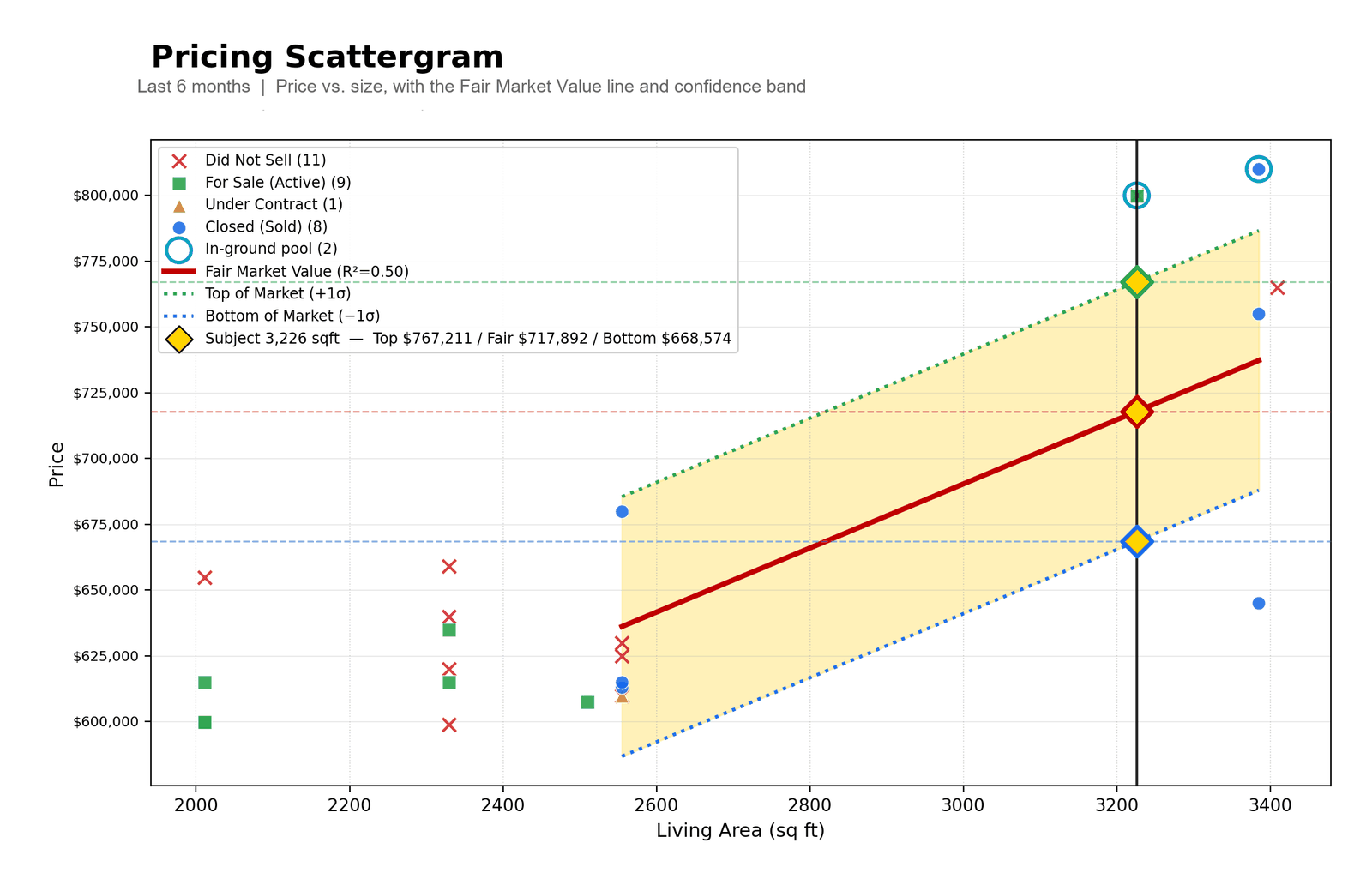
So the resale was priced off the bottom of the band, not the middle. The scattergram puts fair market value at this size around $717,892, with a top near $767,211 and a bottom near $668,574. In a normal market the middle is the honest read. Here it is not, and Bryce says plainly that going off the bottom line is not what he usually does. The plan on camera is to list at $650,000 and budget for one $50,000 price drop, which means underwriting to a $600,000 sale. Take a 25% profit margin and the costs of sale out of $600,000, with nothing needed to make the house market-ready, and the cash offer is $419,000.
Then comes the part that makes this video different: “I don’t know if you can accept that. I don’t know your situation, but if you’re trying to just get cash out, I’m guessing you’re probably not going to be able to do that.” The seller holds a 3.7% mortgage, and a rate like that written in 2022 is worth real money when new loans cost more than seven percent. So the deal was underwritten three more ways.
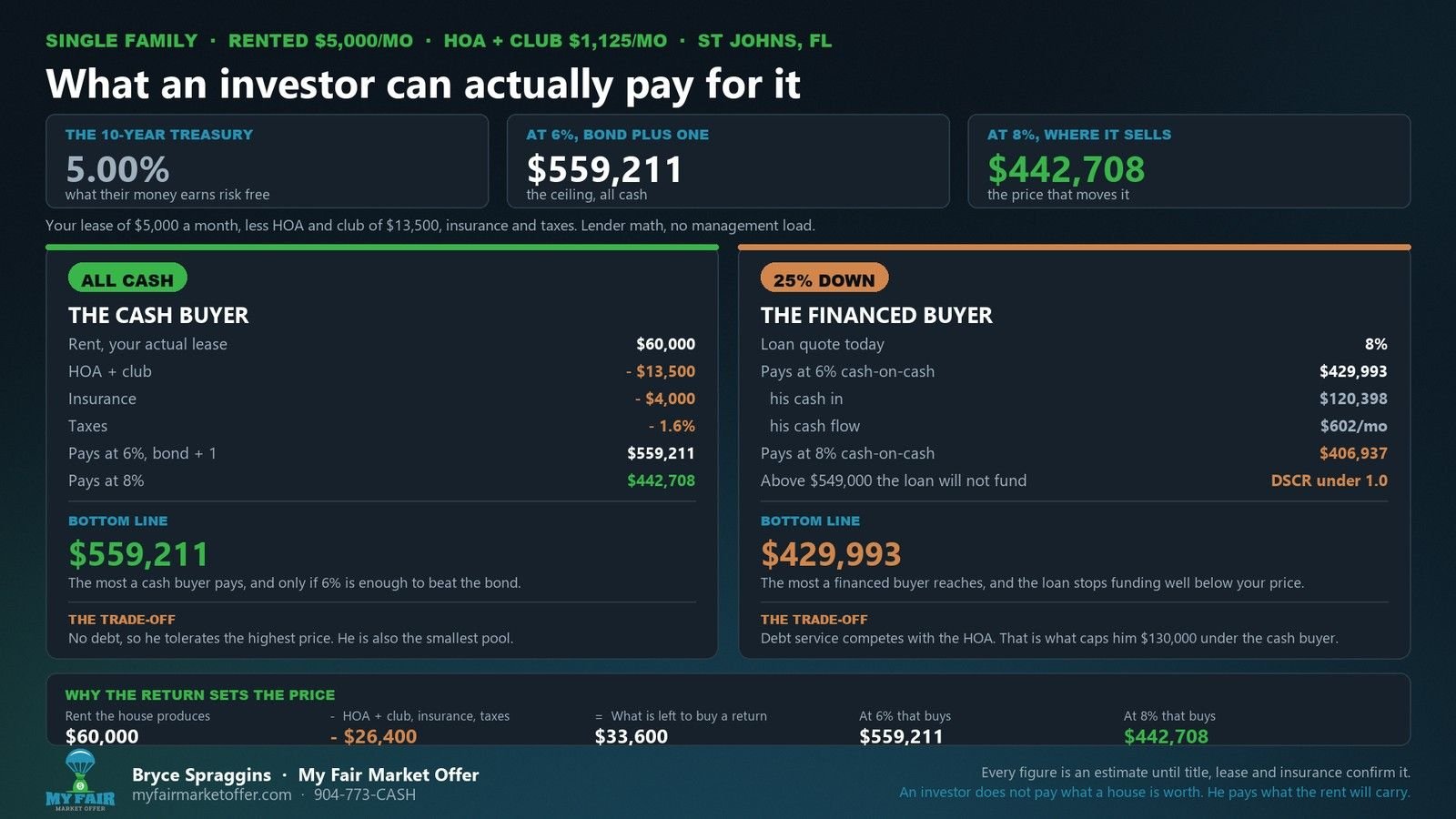
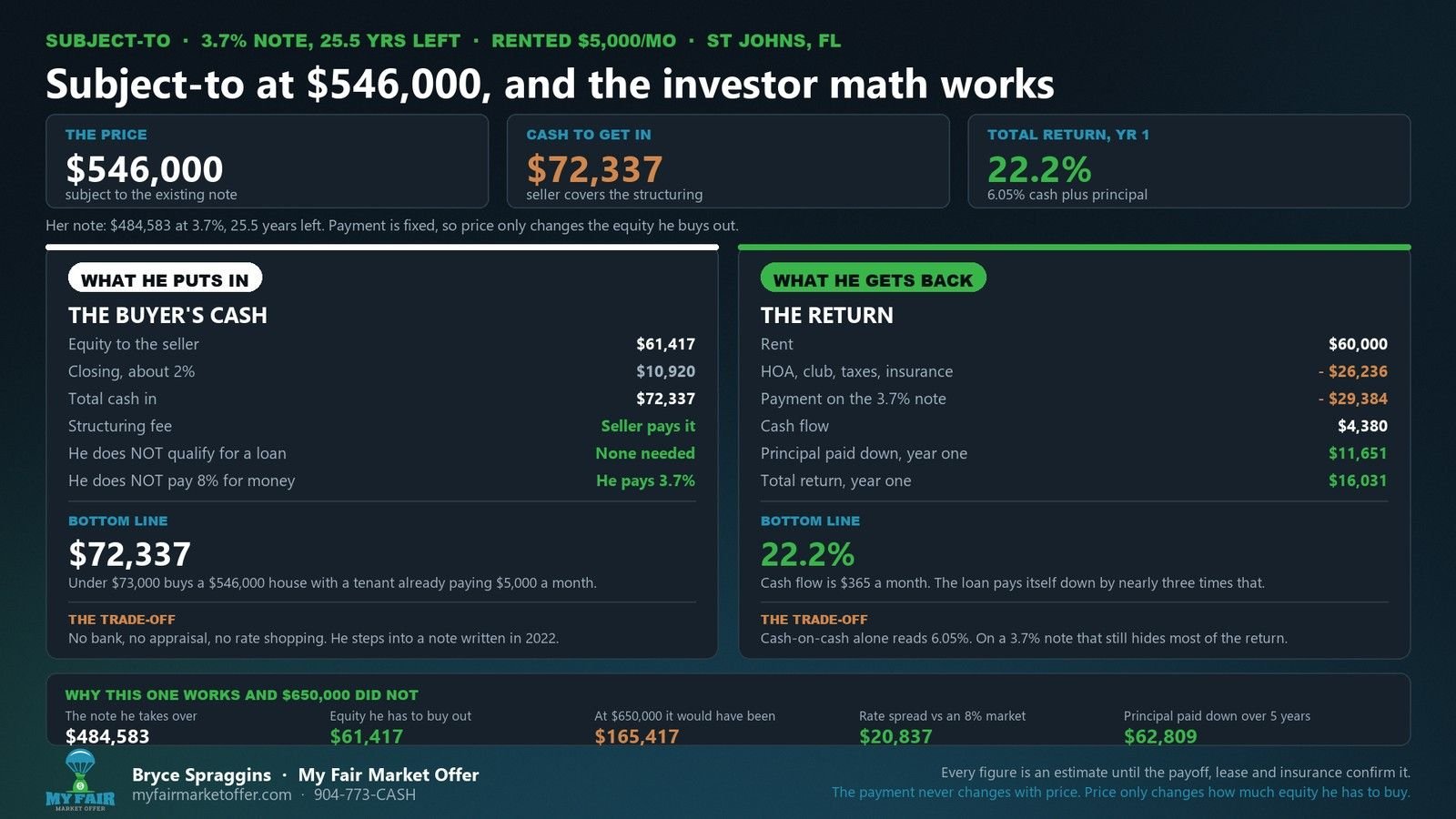
Sold to a buy-and-hold investor who takes over the 3.7% note. Using a subject-to or a wraparound, the buyer keeps the existing rate and brings 20% to 25% cash to the table. The arithmetic only works for the investor at around $546,000, because a rental carrying $1,125 a month of HOA and club fees has to be bought cheaply enough to leave a return. Bryce is direct about where he sits: he would not be a buyer at that number, but he believes he could assemble that deal quickly, for a $20,000 fee.
Listed conventionally. He would list at $650,000 and expect $600,000 — but he would not recommend listing it at all until the tenant is out, which means the seller carries the full monthly cost with no rent coming in. He frames that as an investment in getting it sold: shown vacant and staged, it has its best chance in a heavy buyer’s market. The net sheet is lower than the headline suggests, and still better than any investor deal.
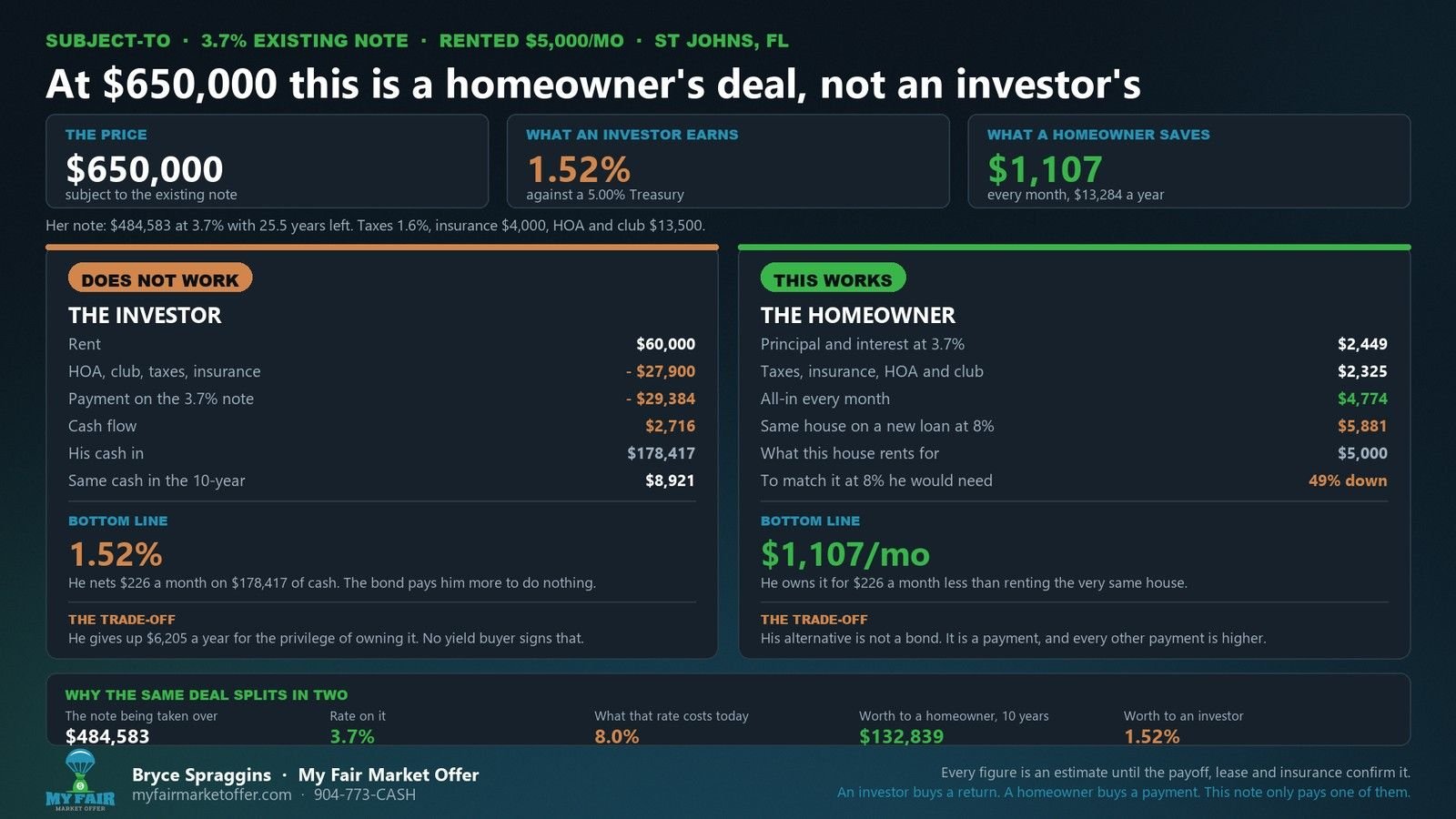
Sold to an end buyer who keeps the 3.7% rate. This is the one that reaches her number. With a retail buyer putting 20% to 25% down and taking over the existing note, the price goes to $700,000. An owner-occupant is not pricing off a cap rate; they are comparing a payment, and a 3.7% note beats anything a bank is writing today. Bryce names the risks rather than glossing them — holding a note has real exposure, and a wraparound gets complicated — and offers to walk through it off camera rather than pitch it on screen.
The video ends the way the good ones in this series do. All the math is on cards the seller can pause and check, share with anyone else who gets a say, and argue with. And if her read is that the market is not favorable enough to sell at all, he says that is a legitimate answer too.
- A 3,226 sq ft house built in 2022, with a tenant paying $5,000 a month on a lease that runs to next summer.
- The comp pull was hyperlocal, her neighborhood only rather than a radius, because there was just enough sales data to read it that way.
- About nine months of inventory. Six months is a balanced market, so this is firmly a buyers market.
- Over twelve months 11 homes closed, 9 are still for sale, and 18 never found a buyer. That is a 29% chance of selling.
- Fair market value at this size reads about $717,892, with a top near $767,211 and a bottom near $668,574.
- The resale was priced off the bottom of the band rather than the middle, which Bryce says on camera is not what he normally does.
- The plan is list at $650,000 and budget for one $50,000 price drop, so the underwriting runs off a $600,000 sale.
- A 25% profit margin and the costs of sale come out of $600,000. Nothing was needed to make the house market-ready.
- The cash offer is $419,000, and he says out loud that he does not know whether she can accept it.
- The seller holds a 3.7% mortgage, which is why the deal was underwritten three more ways.
- To a buy-and-hold investor taking over that note, the math works at around $546,000. He would not be a buyer at that price but would assemble the deal for a $20,000 fee.
- Listed conventionally he would not recommend going to market until the tenant is out, which means the seller carries the full monthly cost with no rent.
- To an end buyer who keeps the 3.7% rate, the price reaches $700,000, because an owner-occupant is comparing a monthly payment rather than a return.
- He names the risks of holding a note and the complexity of a wraparound rather than selling the structure, and offers to walk through it off camera.