This is a cash offer that came with advice not to take it. The property is an occupied Jacksonville rental — 3 bed, 1 bath, 1,712 sq ft, renting for $1,685 a month on a lease that runs to April 30, 2027. Renovated, vacant and converted to a second bathroom it would retail around $200,000, and the as-is cash offer against that was $83,130. But a tenant-occupied rental does not sell to a retail buyer, because a retail buyer needs to move in. It sells to an investor, and an investor prices it off the rent. An all-cash investor wanting a genuine 8 percent return — after management, vacancy, maintenance, taxes, insurance and reserves for the roof and air conditioner — can pay about $114,000. A buyer using a DSCR loan at the 1.25 ratio most lenders require would pay $169,709 and lose money every month, which is why nobody does it. At a 1.50 DSCR the price is $136,007 and the return is about 1 percent. The recommendation given was to wait for the lease to end and sell retail vacant — not to take the cash offer, and not to list it occupied either.
Real Offers · Normandy, Jacksonville
3 bed, 1 bath, 1,712 sq ft · 1957 masonry · rented at $1,685/mo on a lease to 4/30/2027 · roof 2018 and HVAC 2023 on the permit record
A cash offer on an occupied Jacksonville rental, and the investor math that says take none of it. What a DSCR buyer pays, what an all-cash buyer needs, and why waiting for the lease to end beats every option on the table.
The address and the homeowner's name are never shown. Everything else — the condition, the comps, and the number — is exactly what happened.
The neighborhood pull and the cash offer, then what the tenancy does to the buyer pool, what a DSCR buyer and an all-cash buyer can each pay, and why waiting beats both.
Most of these pages end with a cash offer. This one ends with a recommendation to refuse it.
The property is a 1957 masonry house in Normandy — 3 bed, 1 bath, about 1,712 sq ft — currently rented at $1,685 a month on a lease that runs to April 30, 2027. The permit record shows the roof replaced in 2018 and the air conditioner in 2023, which takes the two most expensive line items off a renovation budget before anyone walks the property.
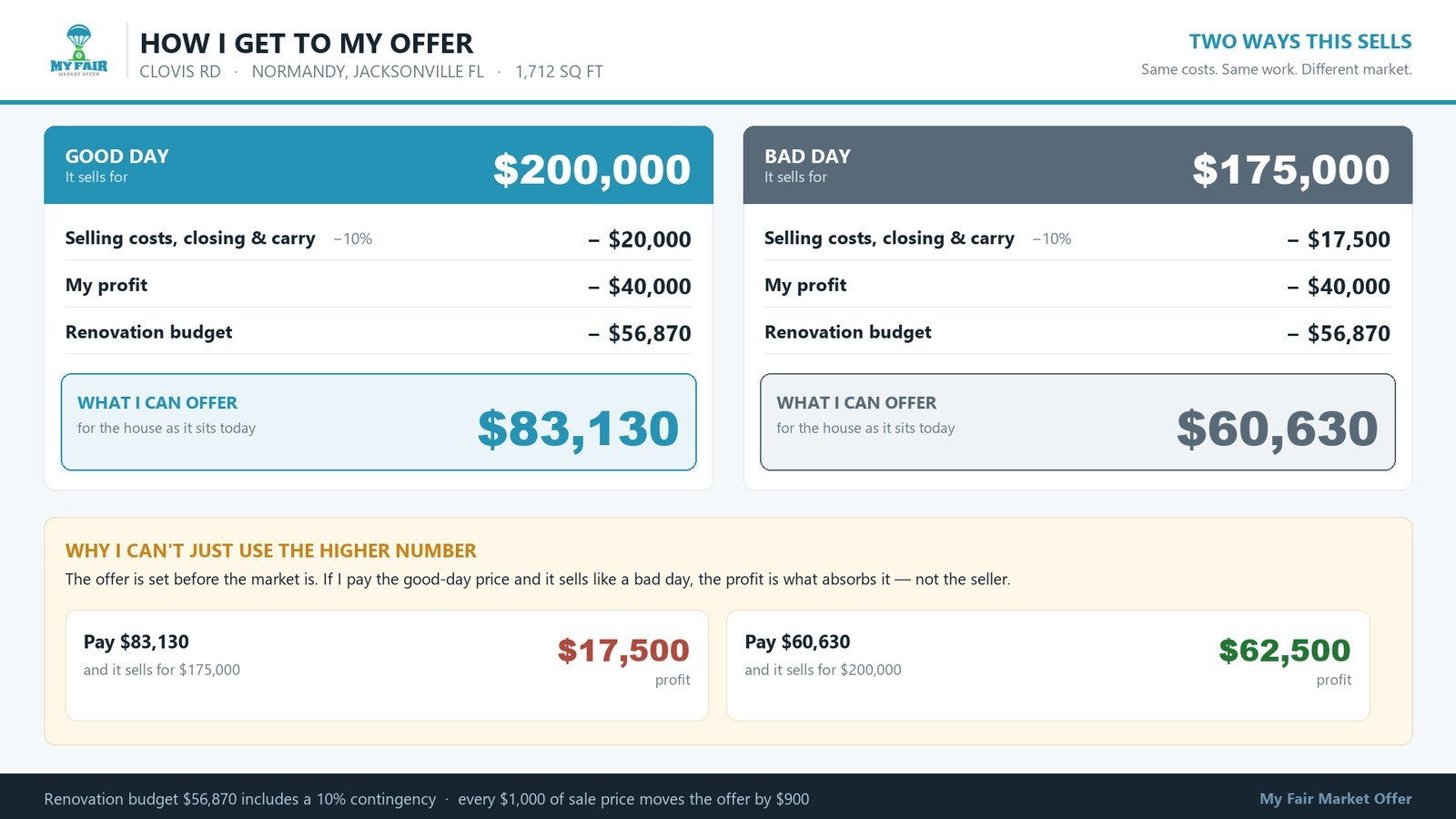
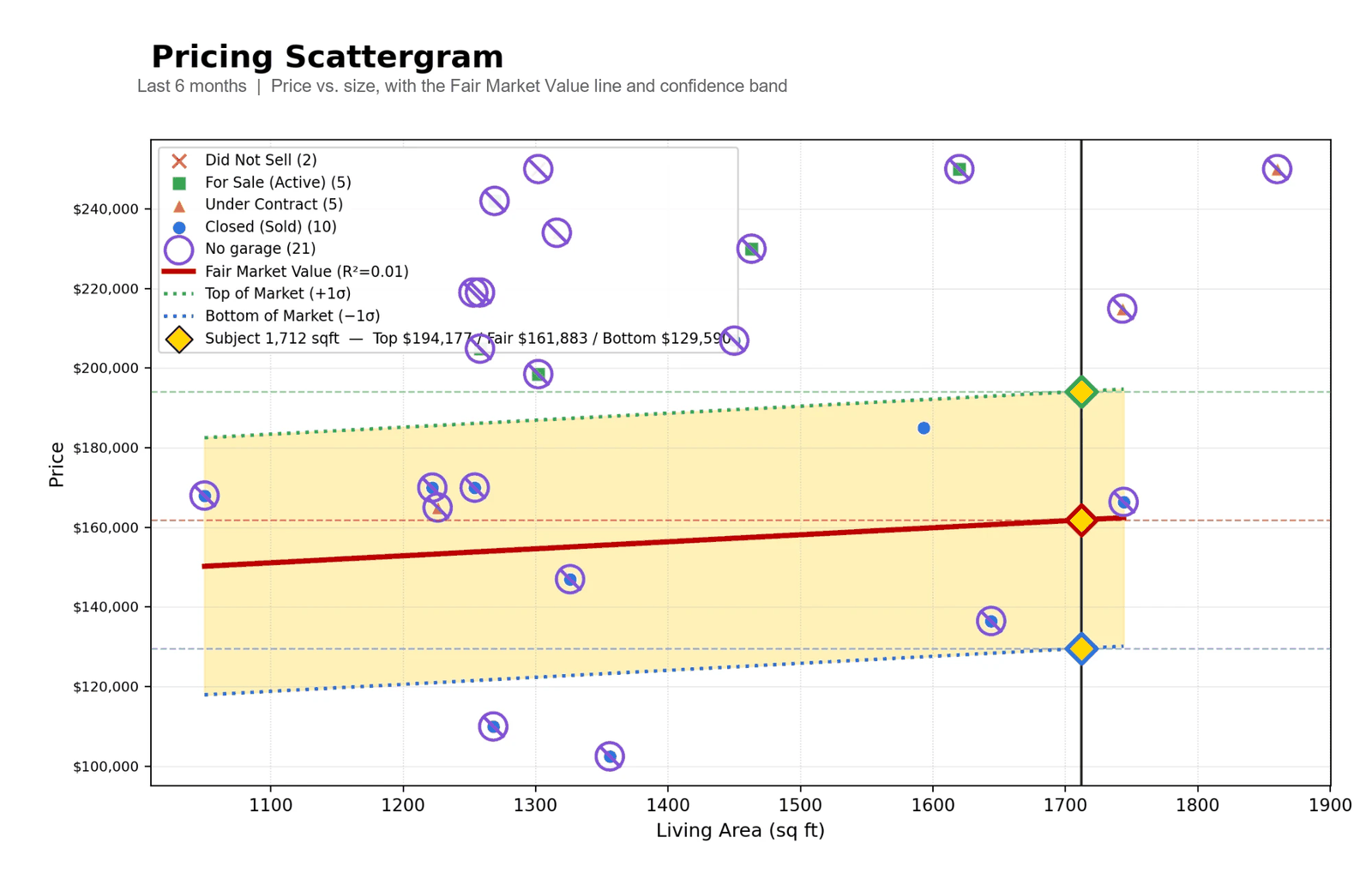
The first half of the valuation is the usual one. Pull every sale and attempted sale in the immediate neighborhood, plot them against square footage, and read the subject off the result. Renovated and vacant, the number is around $200,000 on a good day and $175,000 on a slow one — though the $200,000 assumes a second bathroom gets added, since a 1,712 sq ft house with one bath competes in a much smaller market than the same house with two. Subtract 10 percent for front-end and back-end closing costs plus carrying, a $40,000 minimum profit margin, and a renovation budget carrying a 10 percent contingency, and the as-is cash offer lands at $83,130.
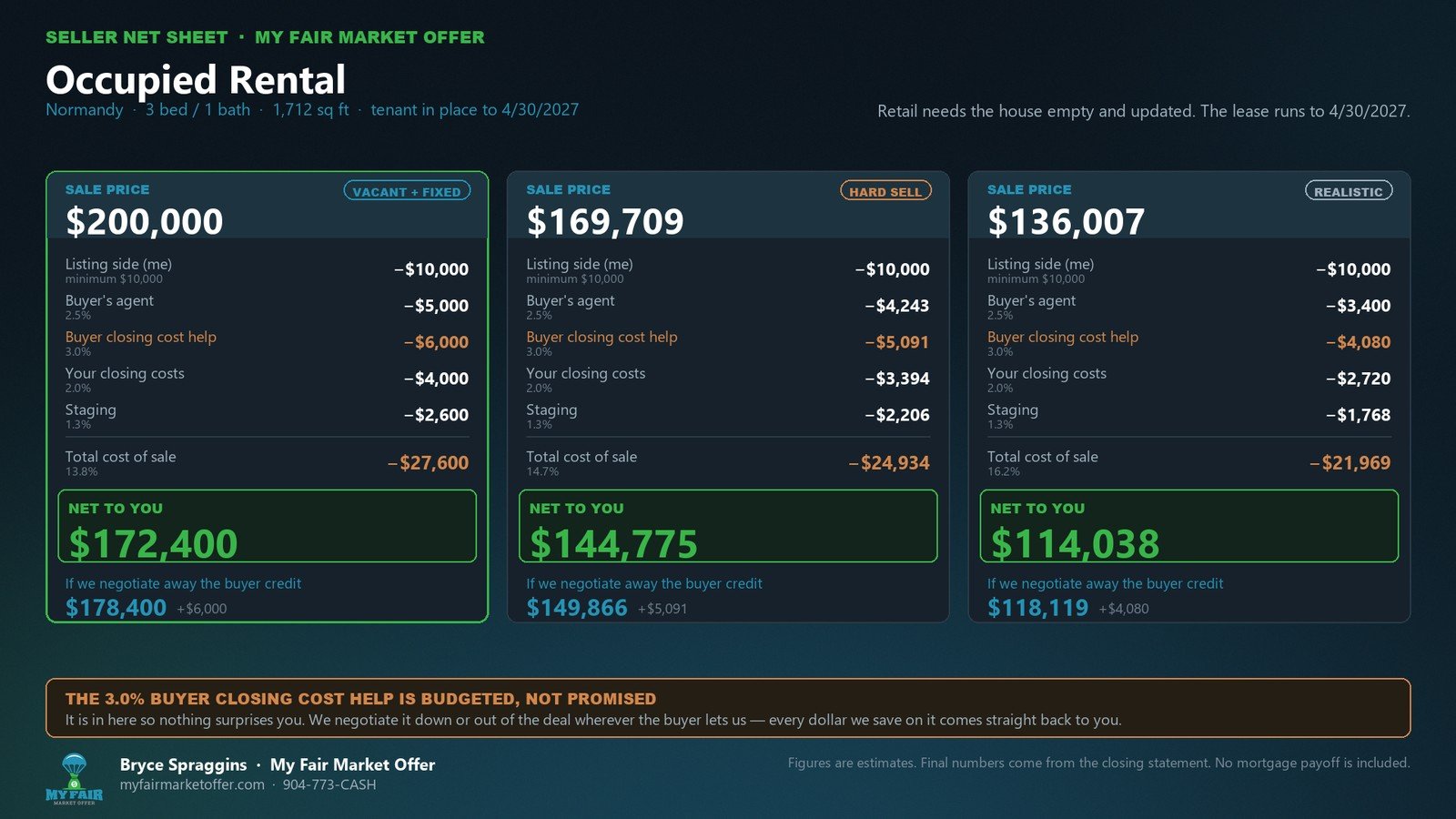
Then the tenancy changes the question entirely. A retail buyer cannot buy an occupied rental, because a retail buyer needs to move in. The $200,000 number is real, but it is not available until the lease ends. Which means the realistic buyer today is an investor — and an investor does not price a house off what it would sell for renovated. They price it off what the rent pays them.
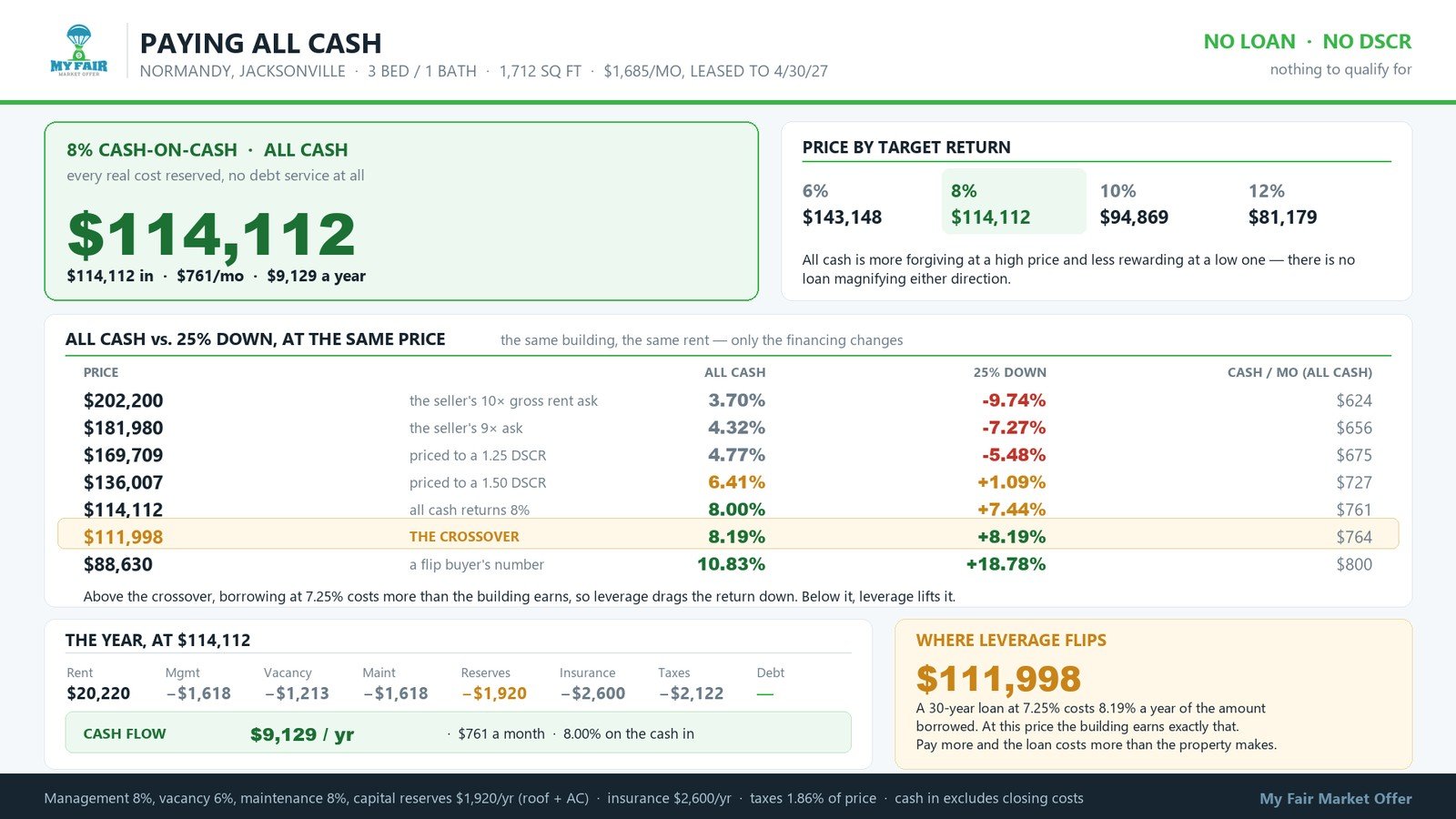
Start with all cash. A buyer who can leave money in an index fund and expect something like 8 percent wants at least that from a house, which is more work and less liquid. Reserve honestly — management, vacancy, maintenance, taxes, insurance, and capital reserves for the roof and the air conditioner against their remaining life — and 8 percent on this rent means paying about $114,000.
Then add a loan, and it gets worse rather than better. Most DSCR lenders want the rent to cover the mortgage, taxes and insurance 1.25 times over. That ratio supports a price of $169,709 — but DSCR only measures rent against the loan payment. It ignores management, vacancy, maintenance and reserves. Put those back and a buyer at $169,709 is losing money every month. Which is why, in practice, nobody pays the 1.25 price.
At a 1.50 DSCR the price falls to $136,007 and the buyer finally breaks into the black — by about 1 percent. That is the honest ceiling for a buy-and-hold purchase of this property while it is rented, and it is roughly $64,000 below what the same house would fetch retail once it is empty.
So the advice was this: wait. Let the lease run out, then sell it vacant to a retail buyer and keep the difference. If waiting is not possible, it can be listed — but it would have to be listed near the number that gives an investor a 1.50 DSCR, not near the retail number, because the retail buyer is not in the market for it.
That advice costs both ways. It turns down the cash purchase, and it turns down a listing that could have been taken today at a price that would not have held.
These are the real charts this offer was priced from — not a re-creation.
Yes, and the lease goes with the house. In Florida a buyer takes title subject to the existing lease, the tenant keeps the same rent and the same end date, and the security deposit transfers to the new owner at closing under Fla. Stat. 83.49. What changes is not whether you can sell but who can buy. A retail buyer is usually someone who intends to live there, and they cannot move into a house somebody else has a signed lease on. That removes the largest pool of buyers from the table and leaves investors, who price the property off the rent rather than off what the house is worth to live in.
Because the two situations attract different buyers with different maths. An empty house competes for retail buyers, who pay what comparable homes sell for in that neighborhood. An occupied rental competes for investors, who pay whatever price makes the rent produce an acceptable return after management, vacancy, maintenance, taxes, insurance and reserves. When the rent is modest relative to local home values, the investor number lands well below the retail number. On this property the gap was roughly $64,000 between a realistic investor price and what the same house would fetch vacant and updated.
DSCR stands for debt service coverage ratio, and it is how lenders qualify an investment property without underwriting the borrower’s personal income. The calculation is the gross monthly rent divided by the monthly principal, interest, taxes, insurance and any association dues. A ratio of 1.00 means the rent exactly covers that payment; most lenders want 1.25, meaning the rent covers it with 25 percent to spare. The critical limitation is what the ratio leaves out: property management, vacancy, ordinary maintenance and capital reserves are not in the calculation at all. A loan can clear 1.25 comfortably while the property loses money every month.
Because a 1.25 DSCR describes the lender’s safety margin, not the buyer’s return. On this property the 1.25 price was $169,709. At that number the rent does cover the mortgage, taxes and insurance with room to spare — but it does not cover the roughly 22 percent of rent that goes to management, vacancy and maintenance, and it does not fund the eventual roof and air conditioner. Add those back and the buyer is negative every month. The ratio has to reach about 1.74 before the same property pays a genuine 8 percent, which is another way of saying the returns bind long before the lender does.
It depends on what the wait is worth against what you need. Selling occupied means selling to an investor at an investor price. Waiting until the property is vacant opens it to retail buyers, who generally pay more — on this property the difference was around $64,000 before costs, against a lease with roughly 19 months left to run, during which the rent keeps arriving. Waiting makes sense when the seller does not need the money on a date and the rent covers the carrying costs. It stops making sense when the equity is needed sooner, when the tenancy is going badly, or when a repair is coming that would consume the difference.
Tell us about the house and you'll get a real as-is cash offer to purchase your home — no repairs, no showings, no commissions. Same process, same honesty, and you'll hear the number out loud.
Bryce will be there. You'll receive a calendar invite shortly.